Friday, 2 May 2014

Black Lake by Johanna Lane

For generations, the Campbells have lived happily at Dulough, an idyllic, rambling estate on the windswept coast of Ireland. But upkeep has drained the family coffers. 
Faced with the heartbreaking possibility of having to sell, John Campbell makes a very difficult decision; to keep Dulough he will turn the estate into a tourist attraction. 
He and his wife, daughter and son will move from the luxury of the big house to a small, damp caretaker's cottage. The upheaval strains the already tenuous threads that bind the family, and when a tragic accident befalls them, long-simmering resentments and unanswered yearnings are forced to the surface. 
As each character is given a turn to speak, their voices tell a complex and fascinating story about what happens when the upstairs becomes the downstairs, and the legacy that remains when family secrets are revealed.


Black Lake by Johanna Lane was published on 1 May 2014 by Tinder Press and is the author's first novel.

The story is set on the fictional estate of Dulough, situated deep in the desolate countryside of County Donegal in Ireland.  Dulough was built in the mid 1800s by an incomer; Scottish landowner Philip Campbell. Campbell built the house and gardens in this spot after searching for the ideal place, he cruelly evicted the tenant farmers who had previously toiled on the land, not caring where they would live once he had turned them out of their homes.

Campbell's ancestor John Campbell, his Dublin born wife Marianne and their two children Kate and Philip continue to live on the estate, but times are hard. The Celtic Tiger has bitten and John has had to sacrifice many things in order to stay on the estate. After doing a deal with the Irish government, the family now reside in a small cottage on the estate whilst tourists and visitors wander around the big house as tour guides give them a potted history of the place.

Johanna Lane tells the story using the voices of the family which enables the reader to learn the facts, but through different eyes which adds a depth to the story that may have been missing from a single narrator.

The Campbells have to deal with tremendous loss throughout this novel. They lose their home, they see their belongings packed away and replaced by things that the Government officers consider to be more fitting to the surroundings. Signs appear in their garden informing them of what each plant is called - the plants that they planted, and grew and nutured - and notices telling them to keep off the grass - their grass.  The biggest and most tragic loss has the most impact on the family, and although it is obvious from the start of the novel what has happened, it is not until almost half way through that the reader learns of the circumstances.

I was totally immersed  by this beautifully told story of loss and family. Each of the characters are intricate and detailed in their creation; the contrast between the well-mannered and dignified John and his emotional and sometimes flamboyant wife who love each other, yet don't seem to know each other is expertly done. Young Philip's sense of loss is palpable, he struggles to come to terms with this new style of living and creates his own hideaway, somewhere of his very own, and it is this which ultimately becomes the downfall of the family.

Johanna Lane incorporates the history of the area into the story with the introduction of the diaries kept by the first Philip Campbell's wife. From these, Marianne discovers the true horror of the evictions, and how the local people suffered first through the Famine and then by being banished from their homes. It is this truth that contributes to Marianne's eventual breakdown, and the knowledge that John hid these facts from her for so many years, in fact he lied about the history of Dulough.

For me though, the true star of Black Lake is the wild desolate beauty that is Donegal itself. Johanna Lane has captured the dramatic landscape, the windswept bogs, the majesty of the mountains and the incredible aura of this area perfectly. My mother is from Donegal, her childhood home is not far away from Glenveagh National Park - the place that Dulough is based on. I spent every summer in Donegal, exploring the countryside, dodging the rain, traipsing through the springy heather, and be assured that Johanna Lake has expertly painted this wondrous and most beautiful of places, just reading it brought back memories so vivid that I could almost smell the turf burning.

A beautiful story, so wonderfully created that deals with unbearable losses and burdens, with intricate family dynamics in a setting that perfectly hosts the story.

My thanks to Tinder Press - my review copy of Black Lake came via BookBridgr.com


Johanna Lane was born in Ireland and studied English Literature at the University of St. Andrews in Scotland, where she was awarded the Hemingway Prize for her short fiction. Upon graduating, the University awarded her the Robert T. Jones Graduate Fellowship to study in the U.S. and she chose Columbia's Creative Writing MFA programme. There, she was one of six students from the School of the Arts selected to teach undergraduate writing. As a work in progress, her first novel, COMING IN FROM THE SEA, was short-listed for the University of East Anglia's Charles Pick Fellowship. She teaches composition and creative writing in New York.

Follow her on Twitter @Johanna_Lane

Follow on Bloglovin

Thursday, 1 May 2014

Coal Creek by Alex Miller

When his father dies, Bobby Blue decides to leave the Mount Hay cattle station where they worked side by side and take a job in town as the new constable's offsider. Daniel, the constable, his wife Esme and their two girls, Irie and Miriam, are new to the western country and, struggling to understand its inhabitants, invite Bobby to stay in a hut on their property where he is educated alongside their daughters.

But there's a simmering tension, building quietly and strongly, beneath the overt goodwill. And when first Irie then Miriam become involved in a dispute that threatens violence, there's an abrupt and ruthless change in attitude from Daniel and Esme towards Bobby.


Coal Creek by Alex Miller is published by Allen & Unwin (Atlantic) on 1 May 2014.

Bobby Blue is a stockman from Mount Hay, a small community in the Australian outback. When Bobby's father dies he decides that he doesn't want to carry on in the same profession and accepts the job as offsider to Constable Daniel Collins.   Daniel and his wife Esme have moved up from the coast with their two children Irie and Miriam.  The outback is a whole new life for them. Bobby is welcomed into the family and young Irie becomes his teacher, showing him words and books.

Ben is Bobby's childhood friend. A different man, wild and a little untamed. Daniel expects that Ben and Daniel Collins will meet one day, they do, and Bobby struggles with where his loyalties should lie.

Coal Creek is narrated in Bobby Blue's slow drawl. He doesn't have a lot of words to say, but those he does are insightful and reveal and a surprising and unexpected depth of character.

Simply told, with not a word wasted this novel brings to life a rich landscape and a young man very cleverly. Miller's descriptive writing allows the reader to almost experience life in the 1950s outback, surrounded by people who speak their mind, simply and to the point. Uneducated as Bobby Blue may be, his voice and his insight into people and circumstances show emotion and feeling far beyond his experience.

With a powerful theme of male friendship, loyalties, betrayals and ultimately love; Coal Creek is a short but meaningful read told with feeling and a real sense of authenticity.

Alex Miller has twice won the prestigious Miles Franklin Literary Award. Australia's premier literary prize; the first occasion in 1993 for The Ancestor Game, and again in 2003 for Journey to the Stone Country. He is also an overall winner of the Commenwealth Writer's Prize, for the Ancestor Game, in 1993. British by birth, he now lives in Victoria.

For more information visit the website www.alexmiller.com.au


Wednesday, 30 April 2014

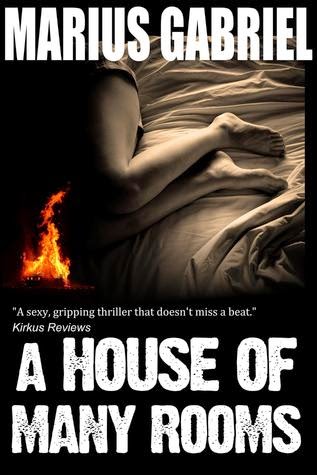
A House of Many Rooms by Marius Gabriel

The Florio family, a rich society couple with two beautiful adopted daughters, is hiding dark secrets beneath a facade of love and care. 
But the fabric of the family is slowly unraveling under the weight of Barbara Florio's chronic drinking and drug abuse as well as the youngest daughter's penchant for arson. 


A House of Many Rooms by Marius Gabriel was originally published in 1999, and was recently re-issued by Thistle Publishing on 14 January 2014.

This is a genre-busting novel that incorporates the action of a thriller with a smouldering romance and is fast-paced enough to keep the reader hooked throughout.

The Florio family are rich but extremely dysfunctional. Parents Michael and Barbara are separated and their two adopted daughters are troubled and confused. As Barbara becomes more dependent upon drugs and alcohol, her two daughters are left to do exactly as they please, which ends in tragedy for Barbara, and is the beginning of a discovery for the two girls.

On the other side of the world, Dr Rebecca Carey is recovering from a climbing accident when she spots an article about the Florio family and instantly recognises ghosts from her past. It is clear that youngest daughter Therese is the main suspect in the hunt for a murderer and Rebecca is determined that she must go to the aid of this young girl.  To explain why Rebecca feels the need to travel so many miles to help a stranger would be to spoil the plot for other readers, but it is an integral part of the story and not quite as random as it seems.

What follows is a fast-paced story populated by well drawn characters, although I believe that Marius Gabriel creates evil far better than he creates good! I was drawn to the bad guy, and to be honest, found Rebecca a tiny bit irritating at times.

However, the story is well constructed with some fabulously realistic characters and that hint of dangerous liaison running most of the way through.

I'd certainly read more by Marius Gabriel, and would like to thank the author for sending my copy for review.

Marius Gabriel was born in South Africa in 1954.
His first full-length novel, The Original Sin, was published in 1993. That was followed by The Mask of Time (1994), A House Of Many Rooms (1999) and The Seventh Moon(2001).
He has also written two historical novels, The Testament Of Marcellus (2009) andGabon (2011).
He is currently working on a trilogy, following the lives of three sisters during World War II. The first volume, Weep No More, was completed in February 2014.
Marius Gabriel currently lives in London. He has three grown-up children.

Find out more at www.mariusgabriel.info    Twitter  @Scribbler4Bread


Follow on Bloglovin

Tuesday, 29 April 2014

Nightingales On Call by Donna Douglas

From the author of The Nightingale Girls, The Nightingale Sisters and The Nightingale Nurses - perfect for fans of Call the Midwife 
1937 sees new challenges for the trainee nurses 
Dora and her old enemy Lucy are paired up on the children's ward for the final three months of their training. The two nurses couldn't seem more different, but they may have more in common than they think, as each hides a secret heartache. 
. and new faces at the Nightingale 
Jess is the feisty eldest daughter of a notorious East End family and determined to prove herself as a ward maid. 
And new trainee nurse Effie can't wait to escape her small Irish village, and make her way as a nurse in London. But Effie's sister Katie soon begins to worry that Effie's behaviour is out of control. 
Nightingales on call and in crisis: have they got what it takes?

Nightingales On Call is the fourth book in the Nightingale series by Donna Douglas and was published by Arrow (Random House) on 24 April 2014.  I reviewed the earlier books in the series here on Random Things; The Nightingale Girls (August 2012),  The Nightingale Sisters (April 2013) and The Nightingale Nurses (October 2013).

As with the other books in this series, Nightingales On Call can be read as a stand-alone novel, but having been a fan of these stories from the very first one, I'd urge readers to get hold of the other books too. Donna Douglas gives enough background information within Nightingales On Call to enable new readers to enjoy it just as much as old fans, but doesn't get too bogged down by things that happened earlier in the series.

This story concentrates mainly on Dora and Lucy who are almost at the end of their three year training,and will soon become Staff Nurses. These two girls have always had a tense relationship; Dora comes from the East End whilst Lucy's family are rich and she's been very spoilt by her parents. Their relationship changes dramatically throughout the course of the story as each of them deals with their own hidden secrets and shame. They find that they do have more in common than anyone could have guessed.

New characters are introduced, including ward maid Jess and trainee nurse Effie.  Both of these bring a breath of fresh air to the nursing school in their own special way.

Once again, Donna Douglas effortlessly takes the reader into the world of student nursing before the NHS. The attention to detail is excellent and life on the wards for these young women is portrayed so well, from the back-aching scrubbing of the floors to the constant reminders that they should not grow close to their patients. Most of the nursing is playing out on the children's wards and I found this particularly fascinating. Imagine your beloved child is sick and in hospital and you can only visit him once per month?  Imagine being able to pay for your child to have a private room on the ward, and being able to visit whenever you want to, but not bothering, and sending your housekeeper instead? These things happened and are played out in the story.

I'll admit that the Nightingale series is not my usual genre but I really do have a soft spot for these stories. Donna Douglas has created a cast of characters who have grown and matured throughout the series. Her research and historical detail is so well done.  I enjoyed Nightingales On Call just as much as the others in the series, and really hope that there is more to come from the Nightingale Girls.

My thanks to the author and the publisher who sent my copy for review.

Donna Douglas lives in York with her husband and daughter.  Besides writing novels, she is also a very well-respected freelance journalist under her real name, Donna Hay.  

For more information about Donna; 
please visit her blog; donnadouglasauthor.wordpress.com/ or follow her on Twitter @donnahay1
Follow on Bloglovin

Monday, 28 April 2014

How To Be A Heroine (or, what I've learned from reading too much) by Samantha Ellis

Cathy Earnshaw or Jane Eyre? 
Petrova or Posy? 
Scarlett or Melanie? 
Lace or Valley of the Dolls? 
On a pilgrimage to Wuthering Heights, Samantha Ellis found herself arguing with her best friend about which heroine was best: Jane Eyre or Cathy Earnshaw. She was all for wild, passionate Cathy; but her friend found Cathy silly, a snob, while courageous Jane makes her own way.
And that's when Samantha realised that all her life she'd been trying to be Cathy when she should have been trying to be Jane. 
So she decided to look again at her heroines - the girls, women, books that had shaped her ideas of the world and how to live. Some of them stood up to the scrutiny (she will always love Lizzy Bennet); some of them most decidedly did not (turns out Katy Carr from What Katy Did isn't a carefree rebel, she's a drip). There were revelations (the real heroine of Gone with the Wind? It's Melanie), joyous reunions (Anne of Green Gables), poignant memories (Sylvia Plath) and tearful goodbyes (Lucy Honeychurch). And then there was Jilly Cooper... 
How To Be A Heroine is Samantha's funny, touching, inspiring exploration of the role of heroines, and our favourite books, in all our lives - and how they change over time, for better or worse, just as we do.

How To Be A Heroine (Or, what I've learned from reading too much) by Samantha Ellis was published by Chatto & Windus on 2 January 2014.

Samantha Ellis grew up in London, she's the daughter of Iraqi-Jewish refugees and for her, the 80s and 90s consisted of listening to her parents wistful memories of their homeland, being made aware that she would have to find a husband who was acceptable ..... and reading books.  Ellis had many literary heroines; from Anne of Green Gables to Sylvia Plath, through to Cathy Earnshaw from Wuthering Heights.

These heroines remained with her into adulthood, each one of them having a special meaning and evoking memories of the time in her life when she read about them.  When she and her best friend visit Haworth, the birthplace of the Bronte sisters, they find themselves arguing about who was the best heroine; Jane Eyre or Cathy?  Feeling disheartened by the fact that she had spent her life trying to be like Cathy, Samantha Ellis went back to her heroines.  She read their stories again, with older, more experienced eyes and How To Be A Heroine is the result of her re-reading.

This is a witty, warm and very reflective read. Most of us will have some childhood literary heroines, those characters who have accompanied through life and never changed. Going back and revisiting those heroines was a brave thing to do, nobody wants to find that they were wrong, and our icons are actually just as flawed, if not more, than we are ourselves.

Samantha Ellis tells her own story throughout this book, and how her reading influenced some of her decisions and some of her dreams. Her family are interesting, her own life is quite eventful and her warm and wry style of writing holds the attention throughout.

It's interesting to read about how Ellis' attitudes towards her heroines changed over time and how they influenced her at the time of reading.  I love the way that she gets so annoyed with authors at times, not holding back from criticising Louisa May Alcott, Dickens and even Shakespeare at times. Berating Shakespeare for killing Juliet and getting so angry about Jo's fate in Little Women.

A totally entertaining and insightful book that will make the reader want to dash to the shelf of much loved books and read them all over again.

Thanks to the publisher Chatto & Windus (Random House) who sent my copy for review.

From www.samanthaellis.me.uk 

grew up in the Iraqi Jewish community in London, and I'm a writer. 
My book, How To Be A Heroine, is out now, published by Chatto & Windus. 
My play, Anatomical Venus, will be produced by Goat and Monkey Theatre in October.
Previous plays include Cling To Me Like Ivy, Patching Havoc, and Sugar and Snow—and short plays for The Miniaturists and for Agent 160. 
I've been a MacDowell Colony Fellow, in residence at Metal, and on attachment at Soho, the Birmingham Rep, Hampstead and at the Unicorn. I also script-edit for Heyday Films.
I'm part of the Dog House writers' group with Robin Booth, Nick Harrop, Matthew Morrison and Ben Musgrave.


Twitter @SamanthaEllis27


Follow on Bloglovin

Sunday, 27 April 2014

We Are All Completely Beside Ourselves by Karen Joy Fowler

Rosemary's young, just at college, and she's decided not to tell anyone a thing about her family. So we're not going to tell you too much either: you'll have to find out for yourselves what it is that makes her unhappy family unlike any other. 
Rosemary is now an only child, but she used to have a sister the same age as her, and an older brother. Both are now gone - vanished from her life. 
There's something unique about Rosemary's sister, Fern. So now she's telling her story; a looping narrative that begins towards the end, and then goes back to the beginning. Twice. 
It's funny, clever, intimate, honest, analytical and swirling with ideas that will come back to bite you. We hope you enjoy it, and if, when you're telling a friend about it, you do decide to spill the beans about Fern, don't feel bad. It's pretty hard to resist.


We Are All Completely Beside Ourselves by Karen Joy Fowler was published by Serpent's Tail in hardback on 6 March 2014.

There is no doubt that Karen Joy Fowler is an accomplished author, with some very clever ideas for her plots.  However, I had real difficulty engaging with both the character of Rosemary who narrates We Are All Completely BesideOurselves, and at times struggled to sustain an interest in her story.

The Cooke family are strange, quirky, more than a little eccentric.  Rosemary was brought up with her sister Fern and her brother Lowell; neither of whom are still around.  Her relationship with her scientist parents is stained to say the least, and Rosemary relates the story of the family’s disintegration to the reader.

This is not a straightforward story of arguments and disconnection, and it is not told in a straightforward way.  There is a shocking reveal that will startle the reader and completely change the way that the family is viewed. I struggled with Rosemary’s style of remembrance; starting in the middle, shooting back and forth; it’s both unsettling and difficult to follow.

The story raises questions for the reader. How could scientists involve their children so much in their experiments and not think about the long-term consequences?

The themes of grief and loss are strong throughout this novel, and are expressed very well, but for me, the story was too disjointed and at times a little stiff for me to fully immerse myself into.


My review copy came via the Lovereading Reviewer Panel - to find out more about Lovereading, visit their website www.lovereading.co.uk


Karen Joy Fowler is the author of six novels and three short story collections. The Jane Austen Book Club spent thirteen weeks on the New York Times bestsellers list and was a New York Times Notable Book. Fowler’s previous novel, Sister Noon, was a finalist for the 2001 PEN/Faulkner Award for fiction. Her debut novel, Sarah Canary, was a New York Times Notable Book, as was her second novel, The Sweetheart Season. In addition, Sarah Canary won the Commonwealth medal for best first novel by a Californian, and was listed for the Irish Times International Fiction Prize as well as the Bay Area Book Reviewers Prize. Fowler’s short story collection Black Glass won the World Fantasy Award in 1999, and her collection What I Didn’t See won the World Fantasy Award in 2011. Fowler and her husband, who have two grown children and five grandchildren, live in Santa Cruz, California.


Follow on Bloglovin

Thursday, 24 April 2014

Carry You by Beth Thomas

“For you mum. This is all for you” 
For anyone who has loved, lost or found it hard to let go, CARRY YOU will make you laugh, cry and celebrate your best friends. Perfect for fans of Marian Keyes and Jo Jo Moyes. 
Daisy has lost her mum to breast cancer. She’s at rock bottom and doesn’t think she’ll ever get back up again. Her best friend Abi has other ideas – she tells it like it is and she’s determined to make Daisy remember the person she used to be. 
What Daisy doesn’t know is that, thanks to Abi, her life is about to take an unexpected turn, when she signs them up to do a charity walk. Added to which, someone is about to burst into Daisy’s world in a riot of colour reminding her that life can be full of surprises.


Carry You is the debut novel from Beth Thomas, published by Avon Books on 24 April 2014.

Daisy spends her days curled up on the sofa, eating Jaffa Cakes and watching re-runs of Hugh Grant movies. Her house is a filthy mess, she's getting fatter, she doesn't answer the phone. Her only connection with the outside world are her constant Facebook updates; and those are flippant and don't tell the whole truth.

Daisy didn't used to be like this but after losing her beloved mother to breast cancer and becoming estranged from the rest of her family, she really can't see any reason in getting washed, dressed ... any reason for anything really.

Abby is Daisy's best friend. Abby is determined that Daisy will pull herself back from the brink of despair and decides that both of them will do the Moonwalk. A fundraising walk of 26 miles through London in the evening, and so begins Abby's quest to get Daisy back into the land of the living.

Carry You is told entirely in Daisy's voice, and at times she is in turns incredibly irritating, selfish, self indulgent and a bit of a pain in the arse. She's also quick witted, funny and underneath the doom and gloom, quite likeable.  She has not only lost her Mother, but she feels cast adrift from the rest of her extended family. Abby is her saviour, and although Daisy tries her very best to get out of training for the walk, and wants to immerse herself in her sorrow and grief, Abby never gives up.

Beth Thomas has cleverly interwoven many themes into Carry You, but overall has managed to keep the story upbeat and positive. Grief and loss are issues that affect all of us during our lives, and each one of us will deal with them in our own different ways. Introducing Daisy to Felix; her 'walking buddy' shows another way of coping with bereavement. Neither of these ways are right or wrong, but both of them are ways that humans deal with loss.

Carry You is written from the heart, that is clear from the depth of feeling portrayed by the main characters, and if Beth Thomas is lucky enough to have a friend like Abby, then I envy her. Abby is the triumph of the story, even though she is not the main character. She lifts Daisy up and continues to support her with determination and love that is indeed the actions of a true friend, and for me, the theme of friendship is the one that shines most brightly through this story.

For me, the novel is just a tad too long, there were a couple of times during Daisy's training for the walk that my mind wandered, but on the whole this is a good debut. I look forward to reading Beth Thomas' next novel.

My thanks to Sabah from LightBrigade PR who sent my copy on behalf of the publisher Avon Books.


About The Author

When a friend suggested that Beth challenge herself to do the Moonwalk, it changed her life. The experience was not just the training and the event itself; it became a pivotal moment in her life that has inspired her to achieve more. It gave her renewed belief in herself, and Carry You was actually partly written during the midst of training, and partly a year after the event.
She now sets herself a new challenge every year – last year having already faced her paralysing fear of heights and climbing mount Snowdon. Alongside this challenge, Beth also has two grown up children aged 18 and 20, and is currently working as a Chief Immigration Officer. 

Follow Beth on Twitter @BethThomas68

Follow Avon Books on Twitter @AvonBooksUK


Follow on Bloglovin